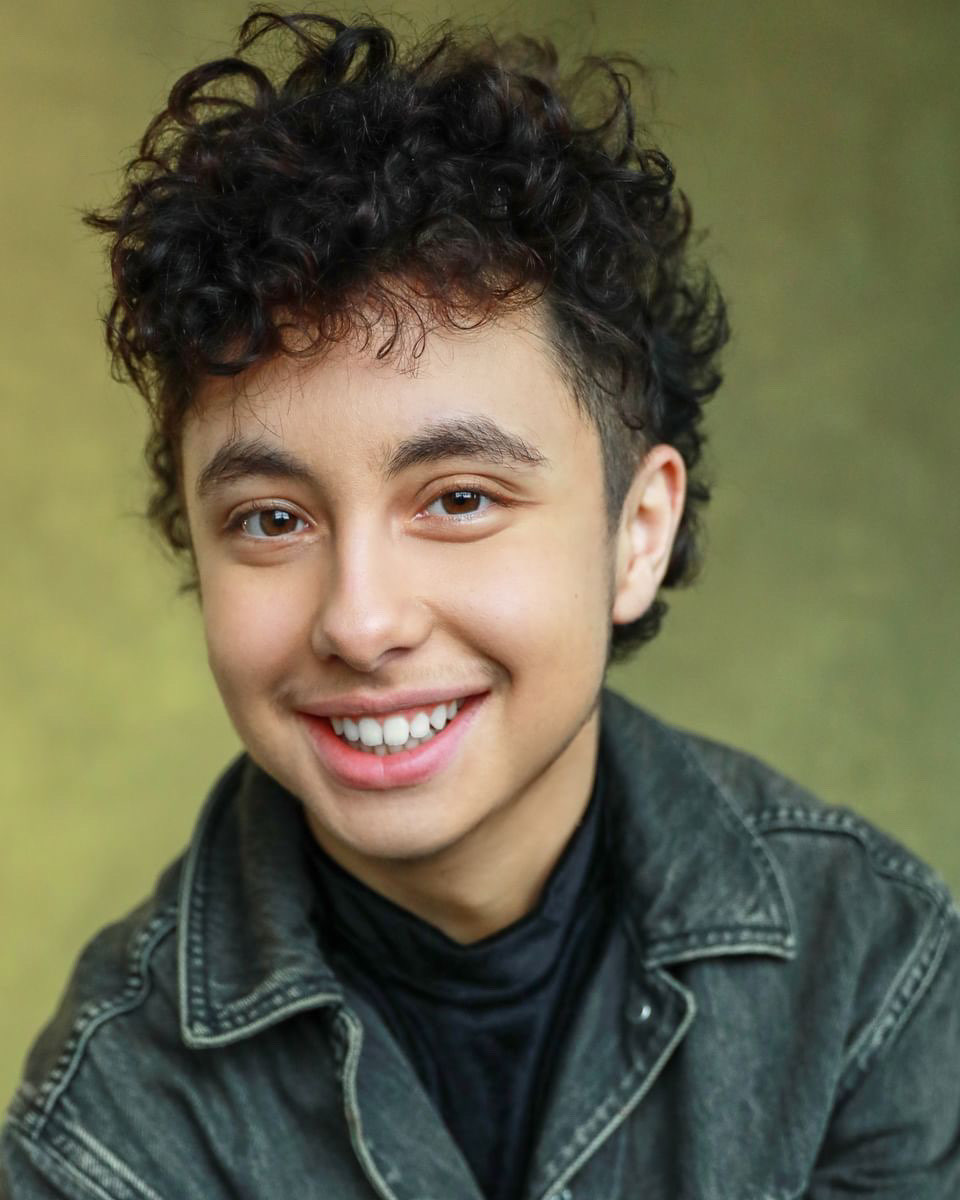
We Chatted with Wendell & Wild Star Sam Zelaya About Representation and His Work.
by Amari Starks and Jude Cuesta
The history of horror is deeply intertwined with queerness, and transness. However, the genre continues to lack authentic and intentional depictions of trans characters. When trans characters or characters who have trans coding are included, they are often reduced to stereotypes, presented as one dimensional, and are white and lacking in intersectionality. Of course, this is not exclusive to the genre of horror but reflects the industry as a whole. According to GLAADs’ latest Studio Responsibility Index report, only two out of 170 characters counted in film last year were transgender.
In 2022 Netflix released the stop motion-animated horror comedy film, Wendell & Wild, produced by Henry Selick and Jordan Peele. The film serves as a bright spot, depicting the vibrancy of trans youth, an intersection of representation that has been overlooked. Wendell & Wild features British actor Sam Zelaya as one of the leads, playing Raúl Cocolotl, an Indigenous Latino trans teenage boy.
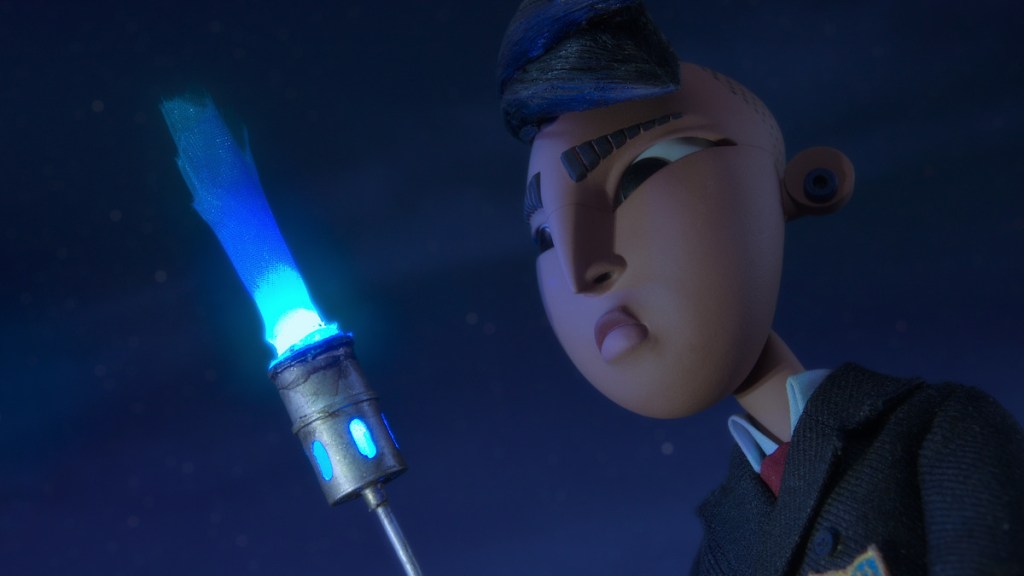
For Trans Awareness Week, we talked to Sam Zelaya about what it was like joining the cast, intersectionality in representation, his work in theater, and more!
This interview has been edited for length and clarity.
—
2G&C: So we know this was your first filming credit. How did you feel about the fact that the first film you were part of had these really big names like Henry Selick and Jordan Peele? How did that feel for you?
Sam: Yeah no, that was, that was crazy. I remember getting the list of everyone that was in it and just kind of going (Sam gives us a stunned expression). They want me, are they sure? Yeah, it’s a lot of pressure when you’re working with people, that you look up to and stuff. I think in the end, you have to take that as a sign that you’ve done something right. Otherwise, the alternative is, letting that pressure completely overwhelm you and then you just do a bad job.
2G&C: What was your favorite thing about Raul?
Sam: There’s just so much about him that I love. I love that he’s allowed to be so much more than just kind of one part of his identity. He’s not just trans or Latino. He’s an artist, an activist, and a good friend. Like a whole person. Which is crazy. I guess we don’t always get to see that with characters that are trans or queer or not white. To be part of that growth of representation, that’s really cool.
I love that kids will be able to see themselves in him. I love for that to be someone’s first experience of seeing a trans character, instead of the experience that I had, which kind of shoved me to the back of the closet for a very long time. It’s nice to think that future generations will have that positive representation.
—
We could not agree more! The intersectionality of Wendell & Wild, allowing these marginalized characters to be fully realized, dynamic characters is special. We don’t get to see people of color be punk or alternative or queer. But Wendell & Wild rejected that.
“It’s interesting I guess, the stereotypical kind of goth image is like the dark hair and the pale skin. And it feels like it’s part of the aesthetic,” Sam says. “ I think it’s great having people like Henry Selick and Jordan Peele just wanting the film to reflect the world that we live in. There’s nothing forced or tokenistic about it. Like it came from a place of love and deep respect for the Afropunk movement and all the people that came before us.”
In stark contrast to the one-dimensional characters that only get to exist within one token identity, Wendell & Wild presented us with full, complex characters.
“Literally 3D because it’s claymation!” Sam says, adding that he loves claymation. One of his favorite films growing up was James and the Giant Peach, so getting to be in one of Henry Selick’s films was a full-circle event.
We also dug into the importance of seeing these characters and normalizing their existence at a time when attacks against trans rights are all too real. Representations of transness in media that encompass the fullness of our lived experiences are more vital than ever as we imagine a future rooted in transfuturism.
When we asked Sam to tell us about his first experience with trans representation in the media and then asked him to speak to his first positive experience, the difference in impact was stark but sobering and a reflection of the sentiments of many other trans people.
Sam: My first was definitely not my best. I grew up in an era of British comedy where we were the joke. And I think a lot of people of my generation are still having to do that work to unpack all those internalized feelings about themselves that that causes.
2G&C: Yeah, at first when we were coming up with this question we were going to ask what was your first positive experience, but we were like…let’s be very realistic.
Sam: That came a lot later down the track.
2G&C: What was it then?
Sam: I think, probably when Orange is the New Black came out. Seeing Laverne Cox…doing an amazing job and being celebrated for who she is. It definitely started me off on that journey. Cause like, I hadn’t really figured anything out then. So it was figuring that out, and then at the same time having to heal my relationship to what that meant for me. It was a long process.
—
Following this question, we wanted to open up our questions more to Sam’s personal experiences and work outside of Wendell & Wild.
2G&C: I’m [Jude] aware of the Latino experience here in the United States, but I’m curious to hear about your experience as a Latino person in the United Kingdom, because I feel like that’s a demographic that doesn’t get represented very often.
Sam: Yeah, I guess there’s a lot less of us here than there are in the US. But it does. It does make for kind of a weird sense of like where you are and who you are in the world. I mean, I tell people here where I’m from, and nine times out of 10 they’ve never heard of it. Yeah, I mean, I don’t think it was until I went to uni that I met someone here that was like Latino and not related to me, so it’s weird.
I don’t always feel as connected to my culture as I’d like to. And I say that…a friend of mine has just got me a cookbook of recipes from El Salvador, so I’m, like, excited to try some of those out. Because when I have been up to visit family and stuff the food has always been (chef’s kiss hand gesture).
2G&C: I can imagine it’s very isolating, not really being able to see people around you at all.
Sam: I think that’s why I was kind of so excited to see the casting call for Wendell &Wild, because it’s not very often that they’re looking to cast trans people or Latinos in anything. So the fact that they wanted someone that were both of those things. It’s like…hi….
2G&C: We read that your entry to acting was in theater, can you talk to us a little bit about how different is to act on stage where you have that in person audience compared to the experience of doing your voice acting for Wendell & Wild over Zoom and what the different approaches required for each?
Sam: It’s very different. Like with voice acting, especially because it takes, sort of…recording…the voice work is the first step of the process, and then they’ve got to animate everything and then edit it all together. So it takes such a long time before you see the finished product. And it takes so many amazing people to take your voice and turn it into what you see in the end product. And yeah, it’s really cool being a part of that. But I do also enjoy the immediate nature of getting to do theater and just kind of reach people that are in the room with you and you have that kind of connection. Yeah, I guess with film you never know if it’s going to speak to people in the way that they want it to until months or years down the track when the movie comes out.
2G&C: We saw that your last play was put on by Ruckus Theater Company whose main goal centers around intersectionality, diversity and giving platforms to disenfranchised communities. Can you tell us a little bit about your experience working with that theater company?
Sam: Yeah, I’ve known them, some of them, for quite a long time now. I think they do really great work in terms of platforming new writing, making theater accessible, not just for audiences, but for performers. Making sure that things are in place behind the scenes for us to be able to just kind of show up. Which can be difficult if you have mobility issues and need a wheelchair. A lot of theaters will say that they’re accessible for an audience, but then backstage infrastructure isn’t in place for a wheelchair user to be able to get backstage and ready and get on stage and perform.
Yeah, it’s refreshing to work with people like Ruckus and CRIPtic Arts who I also worked with earlier this year. They both are very supportive in terms of just making sure that people’s access needs were met and that we wouldn’t have to worry about any of that getting in the way of us having a good time and doing what we’re there to do.
—
We’ve all heard the phrase “representation matters”. It’s become almost ubiquitous in discussions about inclusivity in the media but only because it’s absolutely true. It’s hard to chase ambition when all of the messaging around you seems to say that you don’t belong in certain spaces. The space made by Wendell & Wild was very important, bringing to screen the first transgender character in a stop motion animated film and portraying him in a way that was thoughtful and fully realized. In addition, hearing about the work done by Ruckus Theater and CRIPtic Arts and their dedication to ensuring an accessible environment for both the audience and the actors was amazing.
In our current political climate, it’s crucial that we make space for ourselves but also that our allies utilize their privilege to allow us to have our voices heard and to be seen, especially at a time when we’re being told to hide ourselves.
“Obviously not everyone’s in a position where it’s safe to be out and proud, fighting the good fight but yeah, for those of us that are sort of lucky enough to be able to do that. It’s more important than ever. And I think it’s more important than ever that our allies come out and support as well. We do a lot of fighting just to exist today day to day. And we’re so…I don’t know about you, but I’m pretty tired.”
In regard to what’s next for Zelaya, he’s open to wherever the work takes him.
“I’d love to do more voiceover work,” Sam says. “But if people want to put me in things, I’ll probably want to be in it.”
And don’t worry, we didn’t forget to ask Zelaya our most important question:
2G&C: What’s your favorite horror movie?
Sam: Such a tricky one. It might have to be Pan’s Labyrinth. It’s one of the first horror movies that I saw, and I was probably too young to see it when I did but that definitely changed something in my brain chemistry. Where I was like I want to be in movies like this.
 Two Goths and a Coffin